Oceania Art of the Pacific Islands in the Metropolitan Museum of Art
Without a uncertainty, the COVID-19 pandemic changed the way audiences view fine art. From virtual tours and talks to meditative, educational livestreams, museums and other cultural institutions found unique ways to keep would-exist guests engaged from the comfort of their living rooms. And although many of united states developed serious cases of screen fatigue after sheltering in identify and weathering regional lockdowns, when it came to experiencing live music, information technology was hard to imagine a socially distanced twist on concerts or shows that felt both safe and wholly engaging.
Merely the shift we experienced during the pandemic hasn't stopped with how we experience fine art. The means creatives make art and tell stories take been — will be — irrevocably altered as a consequence of the pandemic. While it might feel like it'south "too soon" to create art about the pandemic — about the loss and feet or even the glimmers of promise — information technology's clear that art will surface, sooner or afterward, that captures both the world as it was and the globe as it is now. There is no "going back to normal" mail-COVID-xix — and art will undoubtedly reflect that.
How Did Museums, Galleries and Art Spaces Adjust to Pandemic Safety Measures?
When it comes to social distancing, the Mona Lisa is a pro. Located at the Louvre Museum in Paris, Leonardo da Vinci'due south beloved Renaissance painting is displayed in a purpose-built, climate-controlled enclosure — complete with bulletproof drinking glass and several anxiety of space between its spot on the wall and the stanchion that holds legions of viewers dorsum. On boilerplate, 6 million people view the Mona Lisa each year, and while the painting is somewhat of an anomaly, large museums similar the Louvre are inundated with throngs of visitors on a near-daily ground. Or, at least, that was true for these popular tourist sites before the novel coronavirus hitting.
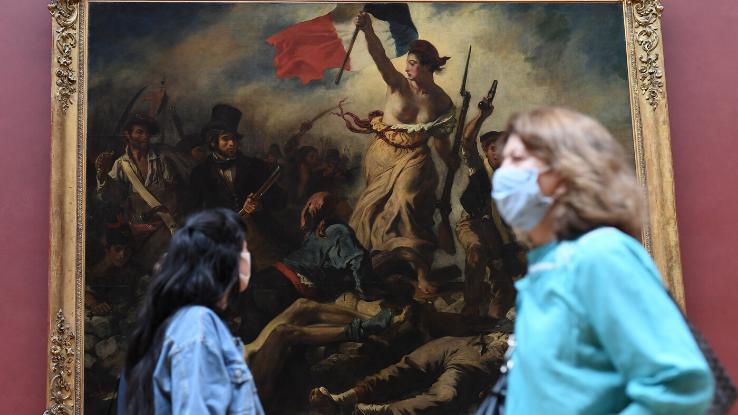
On July half dozen, the Louvre ended its 16-week closure, assuasive masked folks to manufactory about and take in works similar Eugène Delacroix'south Freedom Leading the People (above) from a distance. Unlike theaters, cinemas and concert halls, museums tend to exist better equipped than other tourist hotspots to mitigate visitor contact and control crowds. It'due south not uncommon for institutions with popular exhibits to institute timed ticketing blocks or curb the number of guests that enter a gallery space at a time, fifty-fifty before social distancing requirements were put into place. Those practices became fifty-fifty more important during reopening but before big-calibration vaccine rollouts had begun taking identify.
Why brave the pandemic to run across the Mona Lisa then? For many folks in the fine art world, including the general director of Opera Memphis Ned Canty, going to a museum or fine art space was more than just something to do to interruption upwardly the monotony of sheltering in place. "[W]e volition e'er want to share that with someone next to usa," Canty said. "Whether nosotros know that person or non, that increases the value of the experience for everyone… It is a basic homo need that will not go away."
Every bit the world's most-visited museum, the pre-COVID-nineteen Louvre welcomed 50,000 people a day, on average. In the summertime of 2020, the museum instituted mask and distancing requirements, an online-only reservation system and a 1-way path through the building. Visitors could no longer meander from piece to piece, and, over the summer, thirty% of the Louvre remained closed. Co-ordinate to NPR, the Louvre anticipated 7,000 people on its first day back, and avid fans didn't let it down: The museum sold all seven,400 bachelor tickets for the yard reopening.
While that number is nowhere well-nigh 50,000, it even so felt like a big gathering of people, no matter the restrictions the museum had put in place. It was certainly large by COVID-19 standards, to say the least, which is probably why the Louvre shuttered again in belatedly October in compliance with the French government's guidelines — and amidst a spike in positive COVID-xix cases. Although the museum has since reopened, mask mandates and social distancing rules have remained, and only the outdoor eateries have been opened.
What Have We Learned From the Art of Pandemics Past?
In the mid-14th century, the Blackness Decease, an epidemic of the bubonic plague that swept through Eurasia and North Africa, killed between 75 meg and 200 million people. In response, Boccaccio penned The Decameron, a "human comedy" most people who flee Florence during the Black Death and keep their spirits up by telling comedic, tragic and raunchy stories. It might have seemed foreign in your higher lit course, just, now, in the face of COVID-xix memes and TikTok videos, peradventure The Decameron's comedy-in-the-confront-of-despair perfectly captured the zeitgeist?
Afterward on, in the wake of the 1918 influenza pandemic, creative person Edvard Munch painted Self Portrait Subsequently the Spanish Flu. Not unlike the selfies taken by tired, despairing healthcare professionals and overwhelmed COVID-19 survivors, Munch's self-portrait captured not only his jaundice but a sense of despair and nihilism. At a time when folks were dealing with the era'southward dual traumas — the cease of World War I and l million deaths worldwide due to the 1918 flu pandemic — information technology's no wonder the art world shifted so drastically.
With this in heed, it'south clear that past public wellness crises have shifted the aesthetics and intent of the piece of work artists are moved to create. Not unlike in the early 20th century, we're living through a fourth dimension of staggering change. Not only have we had to contend with a wellness crunch, merely in the United States, folks realized the ability of protest in meaningful new ways by rallying behind the Black Lives Affair Move; the fight for the rights and sovereignty of Ethnic peoples; trans and queer rights movements; and the fight against climate change.
Why Was Information technology Of import to Foster Art Spaces Outside of Museums and Galleries During the Pandemic?
The AIDS Crisis of the 1980s and 1990s — augmented by the silence and inaction from President Reagan and the Centers for Illness Control and Prevention — devastated a generation, namely a generation of gay men, Black people, queer people of color and sex activity workers. In addition to fighting for their public wellness concerns to be recognized in the midst of the HIV/AIDS epidemic, activists were also fighting for human being rights. Every bit such, myriad artists, including Keith Haring, Robert Mapplethorpe, Andres Serrano, David Wojnarowicz and Nan Goldin (merely to proper name a few), lent their work and voices to bring visibility to what the authorities was ignoring.
The intent behind these works varied: Some pieces were meant to document the epidemic, while others were meant to amplify silenced voices and underscore the humanity of folks fighting for their lives. The goal wasn't to brand museum-canonical works. Now, during a fourth dimension of immense modify and disruption, we tin nonetheless see important, era-defining works of art emerging all around us.
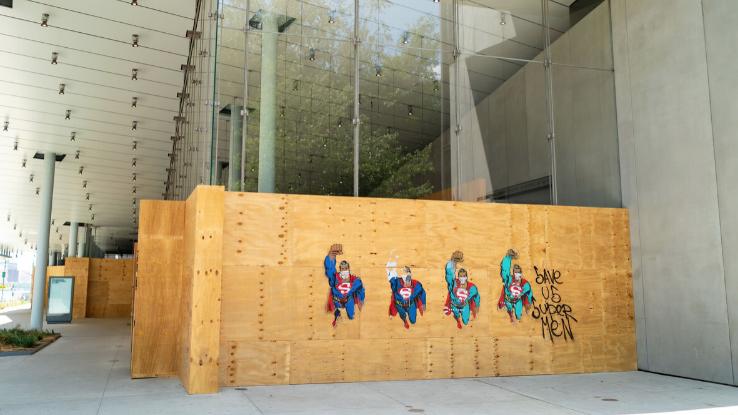
In the wake of George Floyd's murder and the first wave of Black Lives Matter Protests in 2020, artists beyond the country — and fifty-fifty the earth — took to the streets to create murals dedicated to Floyd, to Black activists and to promoting radical change. In parks and public spaces all across the world, activists toppled statues and other monuments to racist and bigoted historical figures, making manner for artists to immortalize new (and bodily) heroes.
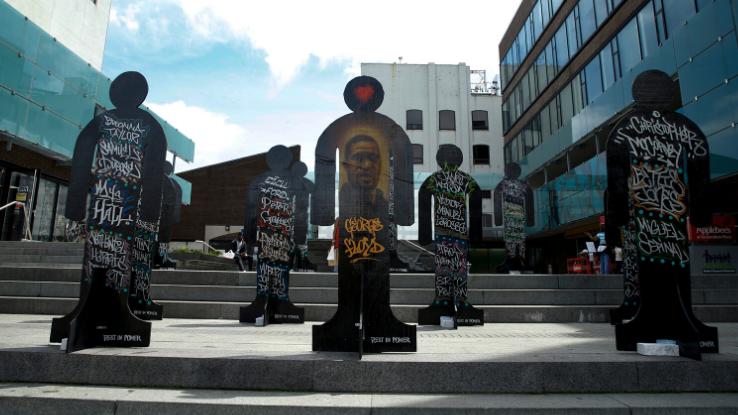
In addition to street art, artists and art collectives seized the opportunity to capture the full general public's attention with other forms of protest fine art. In Brooklyn, New York's Bed-Stuy neighborhood, an bearding group of artists installed a Blackness Lives Thing piece (above). In it, Black figures, covered in the names and images of Black men and women who have been murdered at the easily of police and because of white supremacy, fill a Fulton Street plaza.
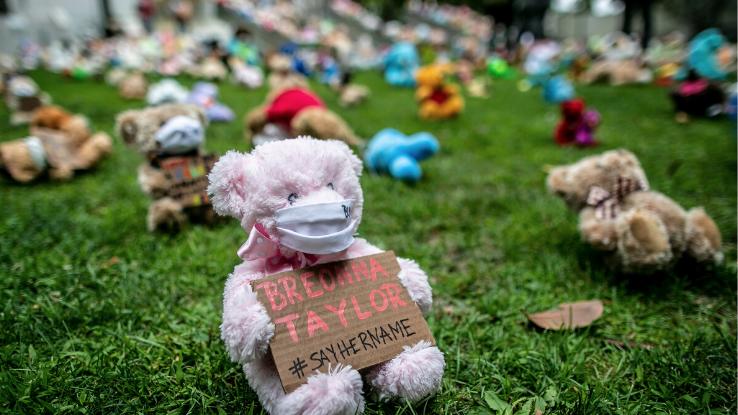
Across the country, in Los Angeles, Mae and Sydni Wynter designed the temporary installation, Conduct the Truth, at City Hall. The grassroots exhibition, fabricated up of teddy bears holding Black Lives Matter signs and sporting face masks as acknowledgements of the COVID-19 pandemic, was meant to be a "positive gateway for children to use their voices for modify."
What'south the State of Art and Museums At present?
From murals on the sides of buildings to installations in public spaces, these works of art are accessible to all — in that location's no budgetary barrier to entry, and they're in open spaces, which allowed folks navigating the pandemic to still see them and withal allows us to relish them as fully vaccinated people take resumed pre-pandemic activities. This isn't a new way of displaying or experiencing art by any means, but it certainly feels more important than ever. Museums accept largely begun reopening their doors while maintaining rubber measures, but, every bit with many other COVID-19 protocols, things seem to vary country-by-state. This may remain true for the foreseeable future, and policies may vary from museum to museum.
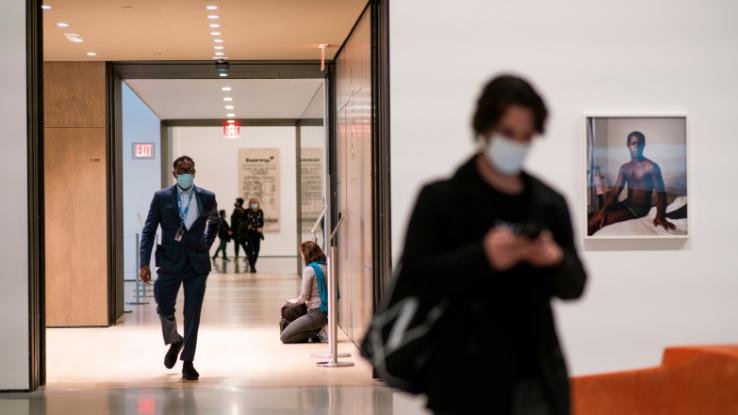
While museums may not be "essential" businesses or services, it'due south articulate that at that place's a want for art, whether information technology's viewed in-person or virtually. In the same way it's difficult to conceptualize what sorts of mediums or imagery will dominate mail-COVID-19 art, it's hard to say what will happen to museums in the coming months. One thing is clear, nonetheless: The art fabricated at present will be as revolutionary equally this time in history.
Source: https://www.ask.com/culture/ask-answers-covid19-pandemic-impact-art-museums?utm_content=params%3Ao%3D740004%26ad%3DdirN%26qo%3DserpIndex
0 Response to "Oceania Art of the Pacific Islands in the Metropolitan Museum of Art"
Post a Comment